

Contemporary Art Ruhr at Zeche Zollverein, October 16-18, 2026
Contemporary Art Ruhr, The Innovative Art Fair
World Cultural Heritage Site Zollverein
Gelsenkirchener Strasse 181, 45309 Essen (Hall A5, Hall A 12)
Kokereiallee 71 (Kokerei C70)
Heinrich-Imig-Straße 11 , 45141 Essen. (Salzlager C88)
Official Opening
Friday, October 16, 7 pm – 10 pm
Public fair hours
Saturday, October 17, 11 am – 7 pm
Sunday, October 18, 11 am – 7 pm
C.A.R. Video Lounge [New location! Salzlager C88 | 57 ] Heinrich-Imig-Straße 11 , 45141 Essen
INGEBORG FÜLEPP / HEIKO DAXL: Media in Motion
Video art between the 1990s and the 2000s presented by Directors Lounge at UNESCO World Heritage Site Zollverein – positioned directly adjacent to the permanent installation “The Palace of Projects” by Ilya and Emilia Kabakov.
The program highlights the work of media artists Ingeborg Fülepp and Heiko Daxl, weaving it closely together with the historical impulses of Media in Motion. Operated between 1990 and 2010 from Berlin and Zagreb, this non-profit organization served as a vital international engine for the video art scene. A major historical milestone was the Media-Scape festival, initiated in Zagreb in 1993. Amidst the geopolitical upheavals of the Croatian War of Independence, the project at the Mimara Museum established one of the first platforms specifically dedicated to contrasting the media-historical shifts between Eastern Europe and the West. For over a decade, the symposium brought together hundreds of artists before relocating to the Lapidarium Museum in Novigrad during the 2000s, and eventually coming full circle with its Berlin offshoot, Strictly Berlin.
The selected video works emerged at a pivotal turning point where political transitions and digital innovations converged. The fall of the Berlin Wall and the end of the Cold War coincided with the rapid ascent of the World Wide Web. During this transitional era, the duo experimented with early programming codes, hyperlinks, CD-ROMs, and a raw glitch aesthetic. Their works explore the newly forming, fluid boundaries between reality and virtuality, questioning the shifting relationship between humans, apparatus, and perception. These visual reflections harness the formal potential of new media without ignoring the risks of technological alienation—always anchored by a search for human empathy, awareness, and connection to the world.
The placement within the Salzlager at Zollverein generates a productive conceptual and medial friction. Positioned directly alongside Ilya and Emilia Kabakov’s monumental, snail-shaped installation The Palace of Projects, the video works engage in a formative dialogue with this archive of utopias. Here, two radically different artistic modes intersect. While the Kabakovs archive 61 fictional, often tragicomic projects for human self-improvement within a (post-)Soviet context through their analog, material-rich “total installation,” Fülepp and Daxl translate this existential quest for orientation into ephemeral, digital moving images. The glowing, warm wooden framework of the palace and the flickering light of the video projections create a shared resonance space. Both artistic positions share a profound look at the condition of the individual in times of radical societal transformation—allowing analog systemic collapses and digital myths of new beginnings to contextualize and permeate one another.

Media In Motion Program:
Download the Playlist-Oct-2026
RGB – Berlin 1997
Video and sound Heiko Daxl, 3:30 mn., production Akademie der Künste.
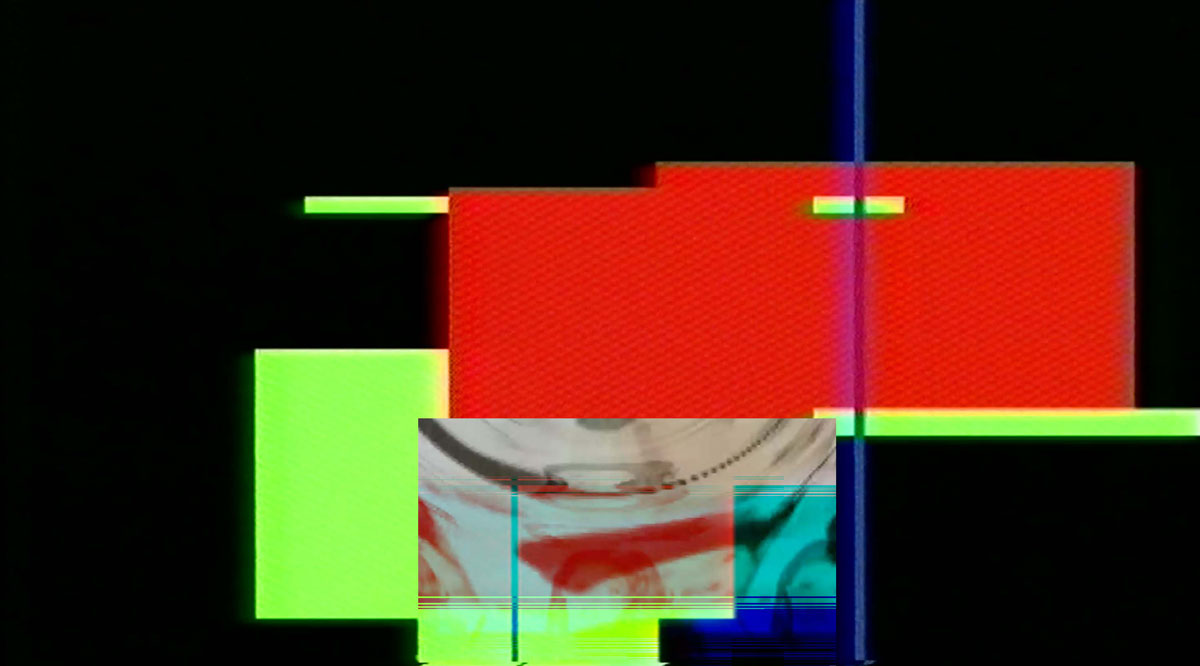
RGB investigates phenomena of red, green and blue, the basic colours of the electronic image. In these three colours there is a manifestation of energetic processes, the passages from one situation to another, as well as metamorphoses, form the circle of being and disappearing, of movement. Energetic shifting of natural circles in other form.
Tuned Graphics – Germany 2005/06, DV Video 3:30 min.
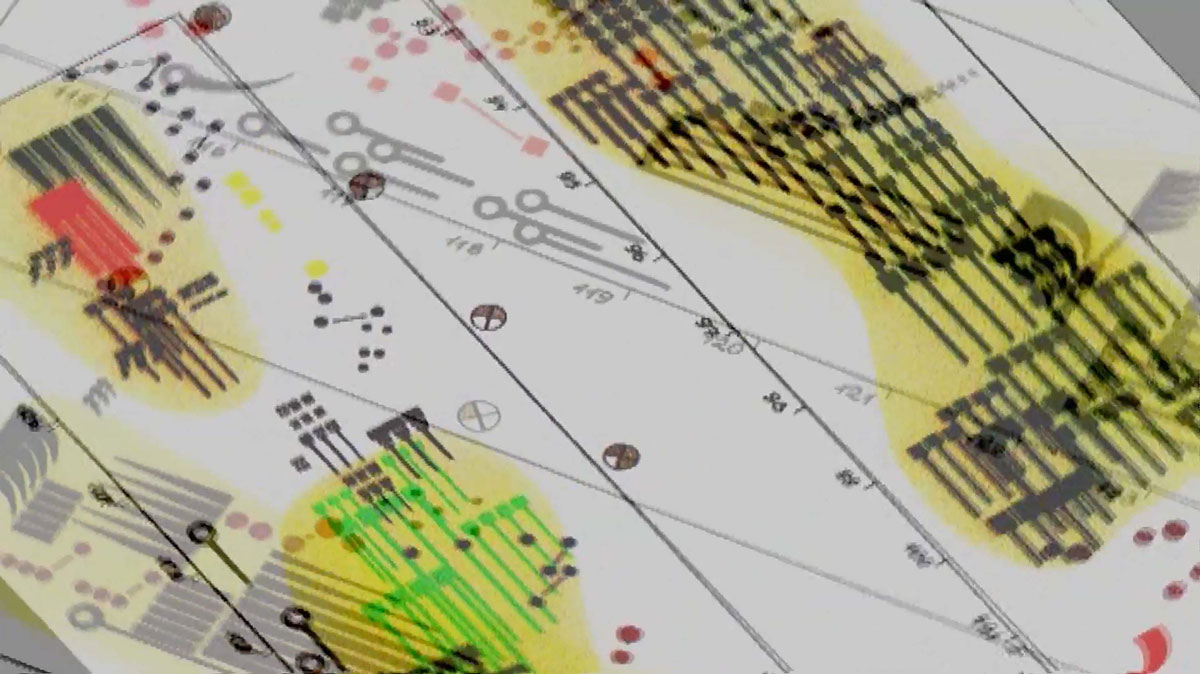
Video: Heiko Daxl, Ingeborg Fülepp produced by media in motion – Berlin/Zagreb, Music: Igor Kuljeri, Animated graphic notations from the collection by Nikša Logo
Euriental Colorus – Berlin 2004, 4:30 min.
Video and sound Heiko Daxl and Ingeborg Fülepp, production Media in Motion.
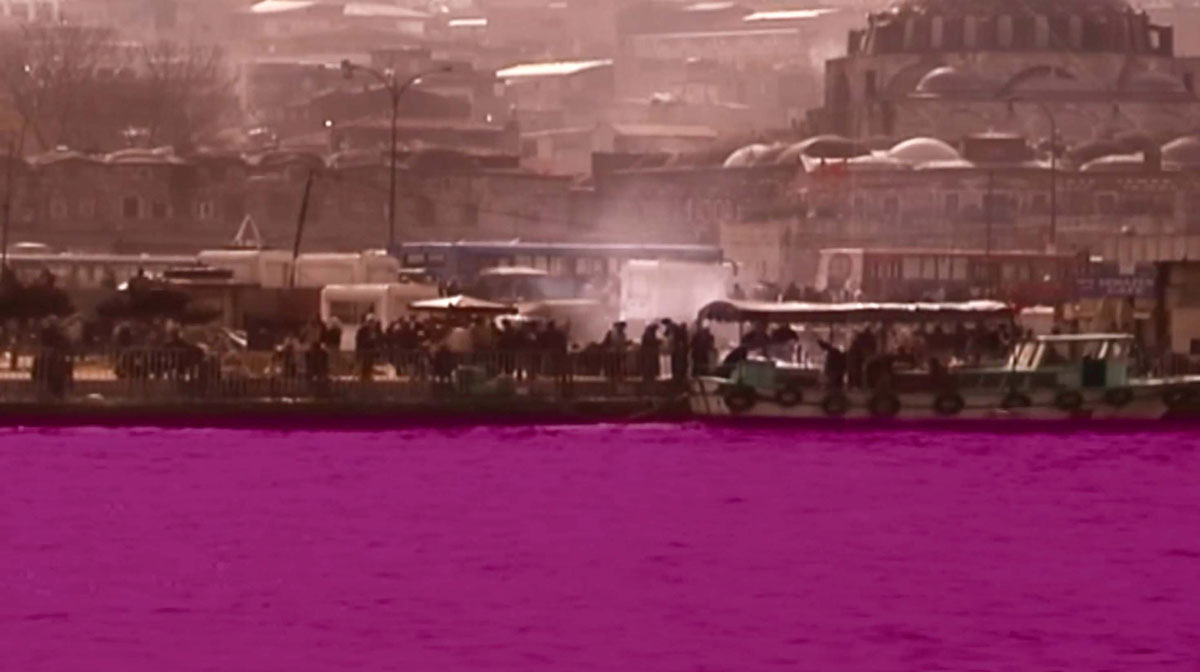
Views from a bridge looking over the “Golden Horn” in Istanbul contrasting with shots of the numerous fashion shops in the Bazaar-Quarter form a collage of colourful sounds and images.
Caisse en Deux – 2003, 6:00 min
Video and sound: Heiko Daxl, production: Media in Motion
Global Eyes – Germany, 2001 1:38 min.
Video by Heiko Daxl and Ingeborg Fülepp, Transformed abstract images in motion, Media in Motion
Neither (1997)
Video: Heiko Daxl and Ingeborg Fülepp, production Media in Motion, Berlin 2007, 14:00 min., music: Valerio Rapetti Pizzorno, speaker: Mona Mur (monamur.com) , Text: Samuel Beckett
Gesundheit und Zivilisation – Health and Civilization – Germany, 1999/2000, 20:00 min
Video: Heiko Daxl, Music: Mona Mur (monamur.com) Explores human vulnerability and civilization, juxtaposing heroic resistance with the chaotic entanglement of individuals in societal transformations.
Kopf – Stein – Zeichen – Stadt – Lied / Glava – Kamen – Znak – Grad – Pjesma – 12:00 min.
Video: Heiko Daxl, produced by Media in Motion, Berlin, Music: Georg Katzer, Paintings: Zlatko Keser, Supported by Akademie der Künste Berlin, 2000
A fusion of moving images, music, and graphics reflecting life, communication, and urbanism. The city becomes a super-matrix, where signs swirl among people, and music is the song of life, framed by the solidity of stone.
Le cinéma – Le Train – Germany, 2003, 14:00 min
Video: Heiko Daxl, Music: Tobias PM Schneid, Sound Design: Markus Lehmann-Horn.
Experience is nothing but a change of memory. Film leaders and railway footage form the raw material. Through manipulation and montage in relation to the music, the work invites reflection, dreams, and memories, while transience remains its constant riddle.
Changes, Songs and Inbetweens – Germany, 2004/2006, DV Video, 14:00 min Video: Heiko Daxl, Ingeborg Fülepp, Production: Media in Motion – Berlin/Zagreb, Music: Tobias PM Schneid.
Night scenes of the city of Zagreb. Everything changes at night—speed, movement, people, and places…
The program is expanded by two corresponding video works by Rainer Görß and André Werner, adding distinct thematic layers to the presentation:
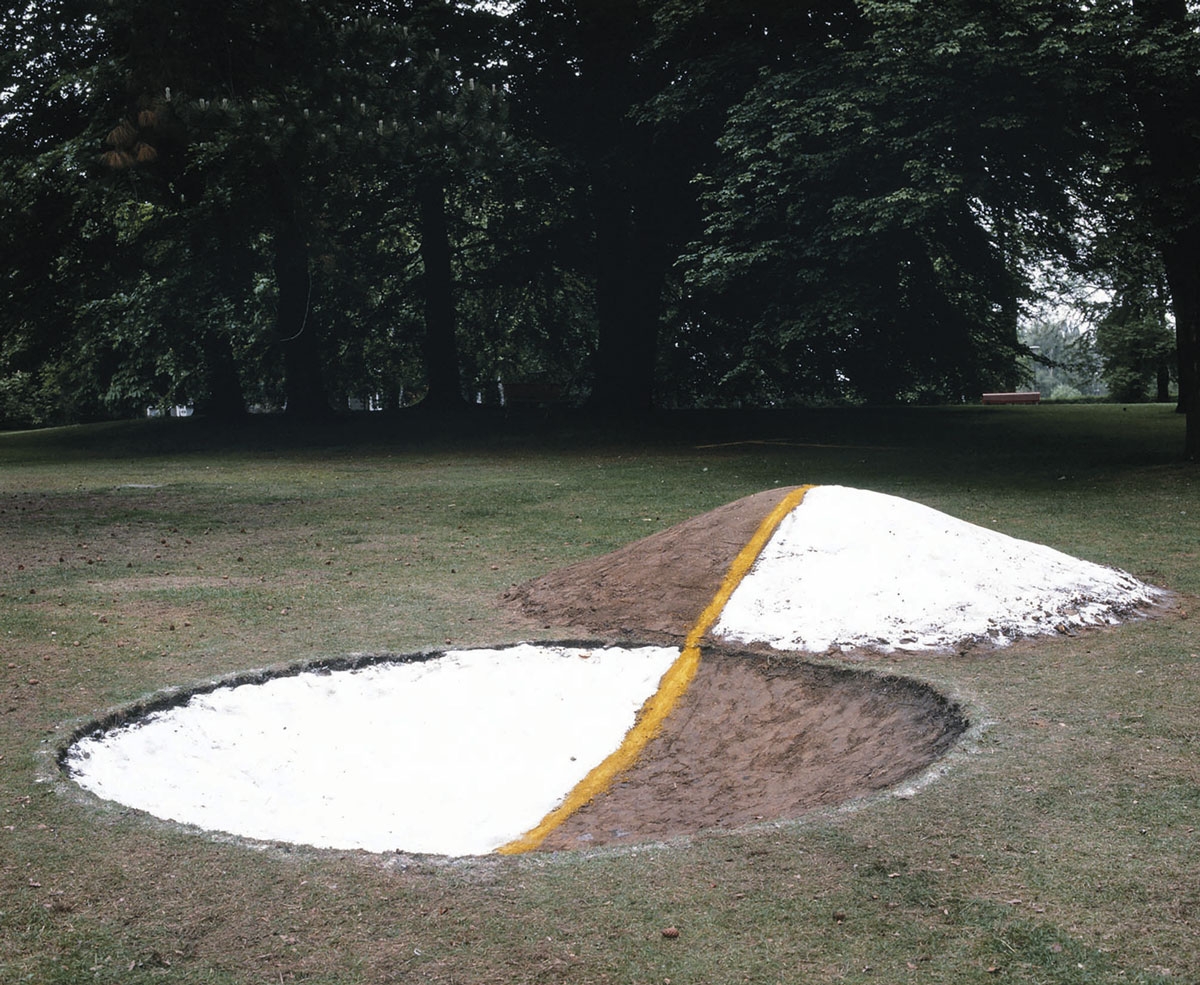
In “Deponiesinus (an die Arbeit)” (Germany, 1991/2006, DV Video, 3:42 min.), Rainer Görß captures a performative intervention in the nearby city of Bochum. By digging two large circles into a lawn, tracing them, and meticulously restoring the original landscape, his work reflects on the Sisyphean nature of human labor and structural inscription into physical space.
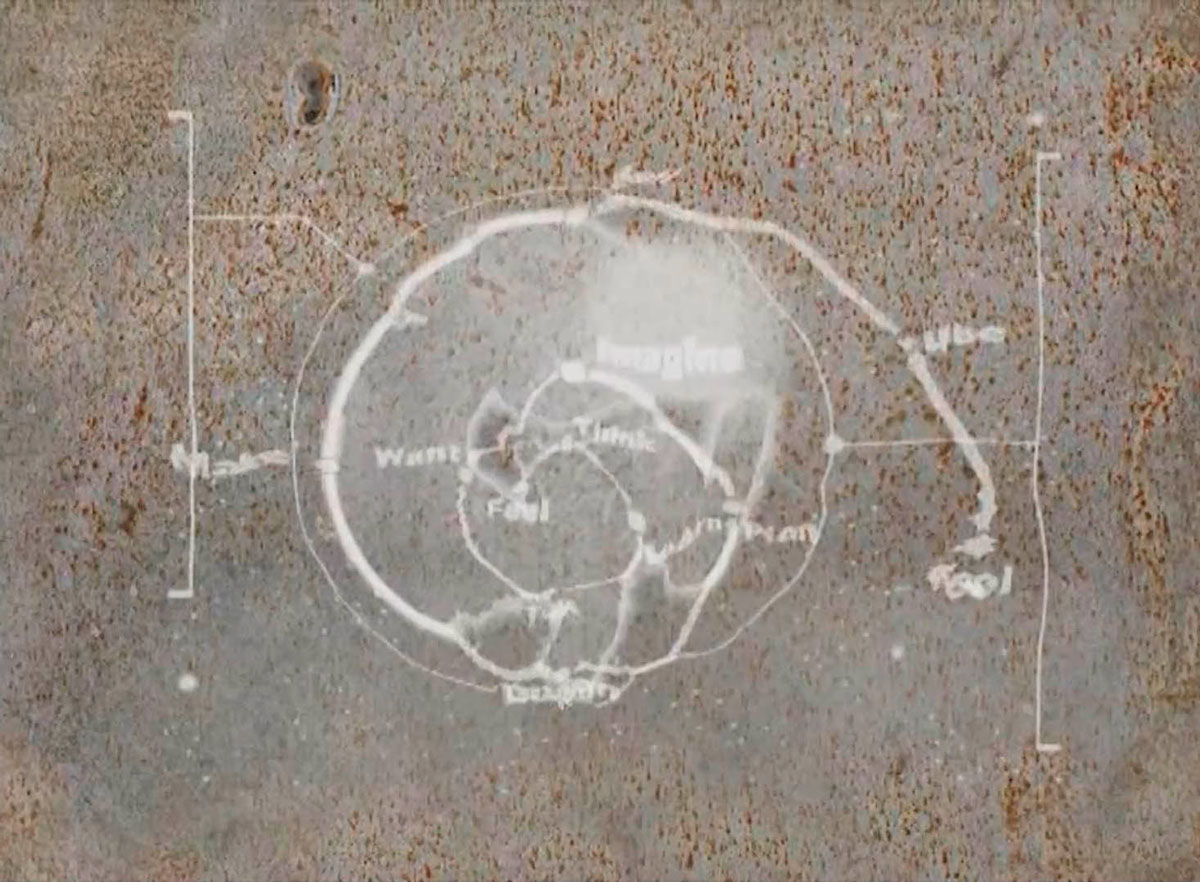
André Werner’s work “Chalks” (Germany, 2002, 7:24 min.) bridges the gap to early digital counterculture. It documents the phenomenon of “warchalking,” where hackers used chalk symbols in public spaces to flag unsecured corporate Wi-Fi networks. Werner seamlessly blends these contemporary markings with scientific diagrams and prehistoric cave drawings, creating a layered archaeology of communication.
TRT 104 min
DL Booth [Hall 12 | Booth 17] Gelsenkirchener Strasse 181, 45309 Essen
with works by Fehlerking, Rainer Goerß, Julia Murakami, Visuman, André Werner, Heiko Daxl
Directors Lounge brings together six artistic perspectives that span historical references, political urgency, and the visualization of invisible systems. On display is a large-format drawing by Rainer Görß from 1992, characterized by dense, architecturally structured lines. This work is juxtaposed with contemporary perspectives: In his photographic triptych from the series “Judith Sings (after Doré),” André Werner links an icon of European art history with the struggle for freedom of Iranian women. In contrast, other works explore subtle processes and digital structures: Fehlerking is represented by a large ink drawing from the series “Gedankenwolken,” while Visuman presents new works from his series “The bell rings,” in which graphic art and painting merge. In “It is Guaranteed!!!” (2003), Heiko Daxl explores the linguistic aesthetics of the early Internet across nine color fields. Finally, Julia Murakami rounds out the atmospheric framework with a new photographic work inspired by the symbolism of Edgar Allan Poe, adding a facet of surreal in-between worlds to the exhibition.


